22nd October 2026 in Community News, Press releases, Project news
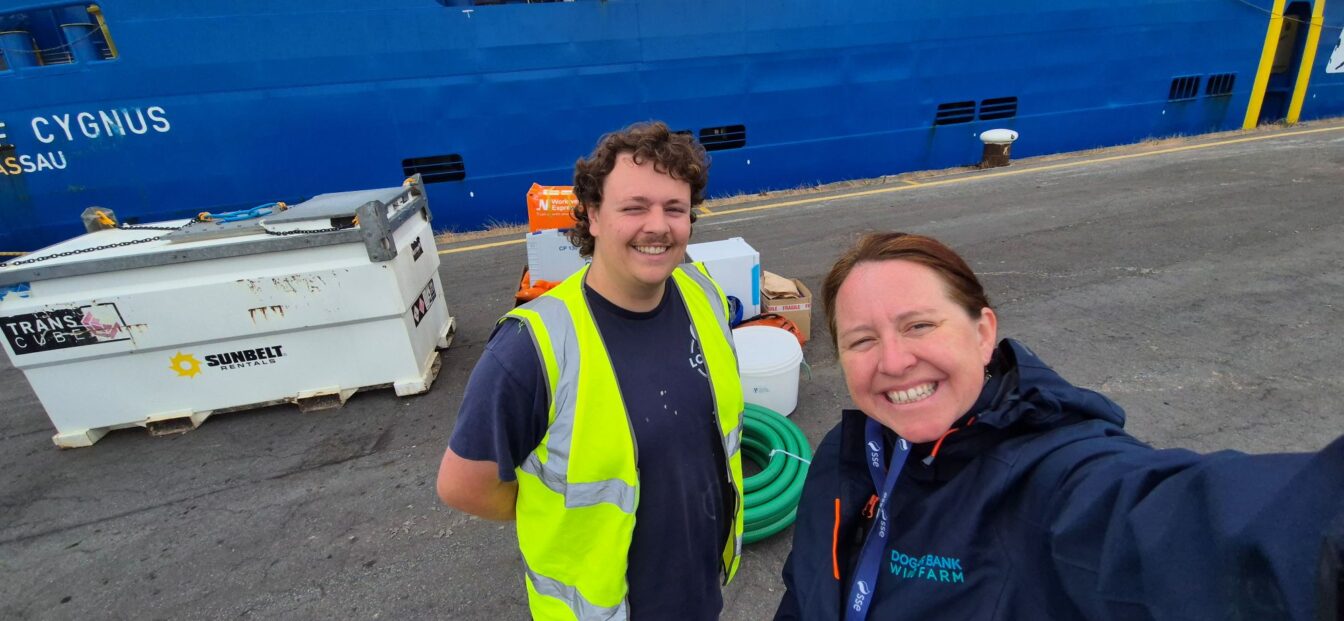
Dogger Bank Wind Farm has released 1,054 juvenile European lobsters (Homarus gammarus) in the North Sea as part of its ongoing partnership with the Whitby Lobster Hatchery.
Operating under the charity name of North Sea Conservation, Whitby Lobster Hatchery works with the local fishing community to hatch and rear juvenile lobsters, before releasing them in the North Sea to help wild populations to thrive.
The fishing community bring ‘berried ‘ egg-bearing female lobsters to the hatchery and as the eggs hatch, the tiny lobsters are raised in protective tanks to a juvenile stage in approximately eight weeks. At the juvenile stage, the lobsters have developed claws and can live independently as bottom feeders.
Dogger Bank Wind Farm has been supporting the work of the Whitby lobster Hatchery and its Marine Discovery visitor centre for a number of years, helping the project to deliver on its key aims of conservation, education and research.
The wind farm, which is currently in construction off the Yorkshire coast, supported the conservation charity with a release of 1,054 lobsters in the Dogger Bank C nearshore development area.
Joe Moody, Head Aquaculturist at Whitby Lobster Hatchery, said:
“After raising these lobsters from the moment they hatched – counting them, feeding them, keeping their tanks clean – it is always so rewarding to see them released back into the wild at the end of their hatchery journey. This release in particular is very exciting due to the unique nature of the site. It offers the possibility of post-release monitoring, so we at the hatchery can know just how well they are doing once they’re back out in the North Sea. We are keen to continue our work with Dogger Bank, and learn more about our little lobsters after their time in the hatchery.”
The juvenile lobster release was combined with time offshore at Dogger Bank Wind Farm collecting seawater for environmental DNA (eDNA) analysis, which provides a non-invasive way to monitor marine life without the need for traditional capture and tagging methods. Seawater samples were collected at the nearshore and offshore DBC site and filtered to recover traces of DNA naturally shed by organisms into the water. By analysing this genetic material, researchers can identify the species present and build a baseline understanding of marine biodiversity and lobster distribution across the study area. This trial will also help assess the effectiveness of using eDNA sampling from Offshore Wind Farm vessels to support future environmental monitoring.
Sarah Reed, Offshore Consents Manager for Dogger Bank Wind Farm, said:
“Dogger Bank Wind Farm’s partnership with the Whitby Lobster Hatchery represents a long-term investment in the biological resilience of the North Sea and the team were delighted to support an offshore release with the opportunity for further research. By releasing lobsters at the juvenile stage the survival rates, compared to lobster eggs hatching in the wild, dramatically increase. By rearing them through the most vulnerable stage at the Whitby Lobster Hatchery and taking the opportunity to optimise this group of lobsters’ offshore deployment alongside the wind farm’s construction programme, we can significantly improve their odds of survival and reproduction. I’m grateful for the opportunity to combine a juvenile lobster release with the trial of new eDNA water sampling equipment and hope it sets the foundations for further research into this important species.”
The partnership between Dogger Bank Wind Farm and Whitby Lobster Hatchery represents a shared commitment to a sustainable future for the Yorkshire coast. Through funding for lobster breeding, rearing and release programmes, alongside education and community engagement activities, the partnership aims to help strengthen lobster stocks, increase understanding of the marine ecosystem and create lasting environmental benefits.
Find out more about Dogger Bank Wind Farm’s relationship with Whitby Lobster Hatchery by watching our video case study.
2nd October 2026 in Community News
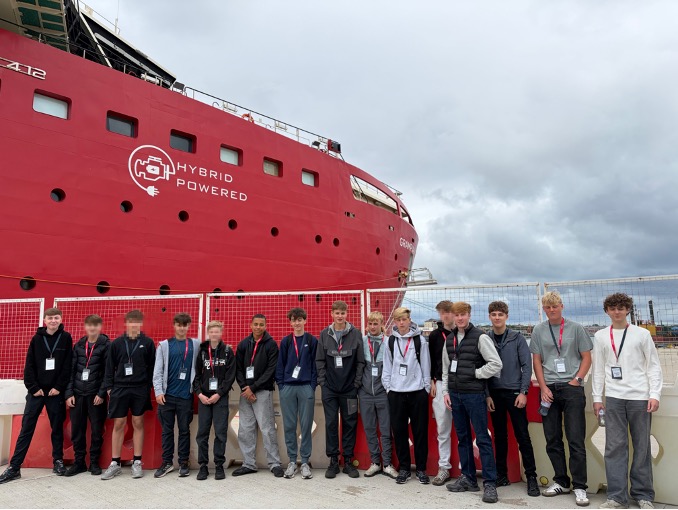
Young people from across the North and North East of England have experienced careers in offshore wind this summer through a series of STEM-focused activities supported by Dogger Bank Wind Farm.
The programme included two dedicated work experience weeks, giving 10 students the opportunity to work alongside project team members, allowing them to gain insight into a range of roles and career pathways involved in developing and operating an offshore wind farm.
As part of the experience, students toured one of Dogger Bank’s Service Operations Vessels (SOVs), providing a glimpse into life working more than 80 miles offshore.
Visits to Smulders shipyard and Soil Machine Dynamics Ltd in Wallsend also helped students understand how organisations across the offshore wind supply chain contribute to the delivery of major renewable energy projects in the UK and around the world.
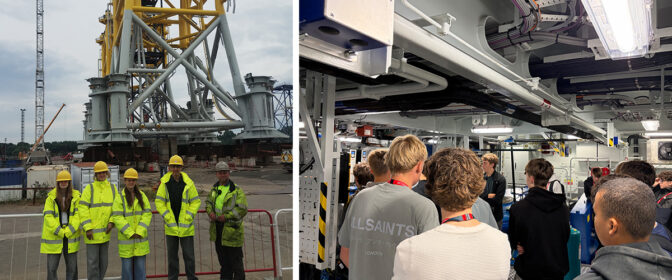
Photo: Students got a glimpse of offshore wind careers through visits to industry sites across North East England.
Archie, aged 15, said:
“The week covered lots of different areas relating to renewables and engineering, with each day feeling fresh and different, which was the most enjoyable part of the experience for me.”
Isla, aged 15, said:
“I really enjoyed that the whole week had lots of different interesting activities each day, and that everyone we met was friendly and supportive.”
The summer programme also included two Career Taster Days delivered in collaboration with the Port of Tyne, providing young people with a chance to explore in more detail, the day-to-day operations behind the world’s largest offshore wind farm under construction.
Across the two events, 40 students took part in activities designed to showcase the wide variety of careers available within offshore wind. The programme included career speed networking sessions with professionals from across the project, tours of the operations and maintenance base, and visits to the marine control centre.
Lucas, aged 14, who attended one of the taster days, said:
“I could see myself in the industry and other areas within it now.”
These activities form part of Dogger Bank Wind Farm’s ongoing commitment to supporting STEM education and inspiring the next generation of engineers, technicians and renewable energy professionals.
Investment in STEM is increasingly important as demand for technical skills continues to grow across the energy sector and wider economy. STEM expertise underpins innovation, development, yet fewer young people are choosing STEM subjects, creating a growing skills gap. Supporting young people to explore science, technology, engineering and maths helps ensure they have the skills, confidence and awareness needed to pursue careers that will play a vital role in delivering the energy transition.
Dogger Bank Wind Farm is investing £26 million to support coastal communities across the North and North East of England throughout the wind farm’s operational life. Alongside community grants and scholarships, the programme invests in STEM education and careers initiatives to help make STEM subjects more relevant, accessible and inspiring, while encouraging young people to consider future careers in offshore wind and renewable energy.
To learn more about the Dogger Bank Community Fund, visit: doggerbank.com/about/community/
15th July 2026 in Community News

A simple idea is making a powerful difference for young people across South Tyneside, helping them get where they need to go to explore their future.
Supported by the Dogger Bank Community Fund, the South Tyneside Careers Transport Bursary is helping remove financial barriers that can prevent students from taking part in career focused visits and experiences.
Now in its second year, the bursary has supported 24 schools and nearly 1,000 young people, enabling 28 career-related visits. These have included trips to clean energy jobs fairs at the Port of Tyne, employer-led site visits, and work experience placements, giving students valuable insight into future education, training and career opportunities.
While transport funding might seem simple, it plays a vital role in ensuring more young people can access opportunities beyond the classroom. By backing practical solutions like this, the Dogger Bank Community Fund is helping to broaden horizons, build confidence and connect young people with the world of work.
Sara Dunlop, Economic Growth and Skills Service Manager at South Tyneside Council said:
“Connecting young people with real-world career experiences is vital in developing the skills pipeline our local businesses need. By opening their eyes to different career pathways and sectors, it helps to raise aspirations while showcasing the exciting jobs and industries that will shape the economy of tomorrow.”
If you would like to add in a call to action – any businesses interested in supporting the bursary scheme can e-mail: business@southtyneside.gov.uk
Kay Doragh, Community Investment Manager at Dogger Bank Wind Farm, said:
“It might not sound glamorous, but funding transport is one of the most effective ways we can support young people. By removing a simple barrier, we’re helping open up opportunities that can shape their future — giving more students the chance to explore careers, build confidence and see what’s possible.”
With continued support and potential contributions from local businesses, the ambition is to expand the bursary further, ensuring even more students across South Tyneside can benefit from meaningful careers experiences in the years ahead.
Businesses interested in supporting the bursary can contact business@southtyneside.gov.uk to find out more.
7th July 2026 in Community News

Dogger Bank Wind Farm has reached a major milestone after it was revealed that its STEM Careers programme has supported more than 10,000 South Tyneside youngsters over the past five years.
Equinor, SSE and Vårgrønn, the companies behind the world’s largest offshore wind farm, made a commitment in 2021 to ensure the benefits of the development were felt in communities across the North East and Yorkshire.
Central to the commitment was its STEM Careers programme, a series of engagement and outreach initiatives designed to provide young people across the region with the confidence and skills required to become work ready and embrace the careers of tomorrow.
South Tyneside is one of three areas to have benefited from the STEM Careers programme, with staff from Dogger Bank Wind Farm working alongside partners including South Tyneside Council and Young Enterprise to support school children across the borough.
This has included working with local schools to deliver a range of initiatives, including female leadership programmes, careers fairs, work experience placements, digital skills training, transport bursaries and its award-winning little inventors programme.
The 10,000 milestone was reached during a three-week programme of events held in schools and community hubs across the borough as part of its Future Ready Pilot, which is taking place from 29 June – 16 July and aims to ensure those young people who’ve been unable to secure vital work experience the opportunity to experience meaningful careers related opportunities.
Students from Jarrow School were among those to participate in a Young Enterprise session as part of their work experience programme. The session was supported by representatives from Arriva and the Cabinet Office who helped to offer a valuable insight into enterprise and the world of work.

Kay Doragh, Community Investment Manager for Dogger Bank Wind Farm, said:
“Reaching more than 10,000 young people is a fantastic milestone and a testament to the strength of our partnerships. We’re proud to support young people across South Tyneside in building the confidence and skills they need for the future.”
Dogger Bank Wind Farm has committed to investing over £25million in communities across the North and North East of England throughout the operational phase of the wind farm, with South Tyneside youngsters set to benefit for at least another 30 years.
Alex Whelan, Economic Inclusion and Career Development Coordinator at South Tyneside Council, said:
“It is tremendous to see so many young people benefiting from the support programmes being delivered by the Dogger Bank Wind Farm team across the borough.
“By providing our young people with the confidence and skills required to enter the world of work, it is not only helping transform lives but is also ensuring our region’s businesses have a pipeline of talented youngsters coming through to fill the roles of tomorrow.
“We are delighted to have supported the efforts of the Dogger Bank Wind Farm team and welcome their continued investment in communities across the borough long into the future.”
One of the schools to have benefited from the STEM Careers programme is Jarrow School.
Charlotte Ridley, careers advisor at Jarrow school, said:
“We would like to give our sincere thanks to the Dogger Bank Community Fund for providing the funding required for Young Enterprise to deliver their launchpad programme and work with our year 10 students. The project has enabled them to develop key enterprise skills and will hopefully stand them in great stead as they progress in each of their chosen careers upon leaving school.”
As part of South Tyneside Council’s Building a Stronger South Tyneside campaign, Dogger Bank Wind Farm will host a dedicated employer session in September. Community Investment Manager Kay Doragh will showcase the impact of the wind farm’s STEM Careers programme and share practical examples of how businesses can engage with schools and young people.
For more information about Dogger Bank Wind Farm, visit: https://doggerbank.com/community
18th May 2026 in Community News

Two of the Dogger Bank scholarship recipients at a celebration event in April 2026.
Students from South Tyneside, Redcar and Cleveland, and East Riding of Yorkshire are invited to apply for the 2026 round of the Dogger Bank Wind Farm Scholarship Programme. The scheme supports undergraduates pursuing science, technology, engineering and mathematics (STEM) degrees with £5,000 of funding.
Scholarships are available to help eligible students with the rising costs of further education and form part of Dogger Bank Wind Farm’s £26 million community investment dedicated to supporting local communities.
In 2026, a further 30 scholarships will be awarded, helping students from communities closest to the wind farm’s construction and operational bases to continue their studies with reduced financial pressure. The scholarship programme reflects Dogger Bank Wind Farm’s long‑term commitment to investing in young people and supporting Science, Technology, Engineering, and Mathematics (STEM) education in the regions where the project operates.
To date, 123 students have already benefited from Dogger Bank’s scholarship support. Recipients are studying a wide range of subjects, including physics, medicine, surveying and aerospace engineering, highlighting the breadth of opportunities across STEM disciplines.
Located more than 130km off the North East coast, Dogger Bank Wind Farm will generate enough electricity to power around six million UK homes. The project is being delivered as a joint venture between Equinor, SSE Renewables and Vårgrønn.
SSE Renewables is leading on the development and construction of the wind farm, while Equinor will operate Dogger Bank throughout its expected 35‑year operational life. Vårgrønn brings offshore wind expertise to the project.
The wind farm is being built in three phases – A, B and C – with grid connections in East Riding of Yorkshire and Teesside. An operations and maintenance base in South Shields will support the wind farm throughout its operational lifespan.
Applications for the 2026 Dogger Bank Scholarship Programme are now open here.
