21st November 2022 in Construction, Press releases, Project news, Supply Chain

- Cranes will support staging of 277 sets of blades, nacelles, and towers at Able Seaton Port
- Contract will create approximately 30 roles at Thornaby-based lifting specialist
- 30 new jobs are part of approximately 470 previously announced in relation to GE contracts in north-east of England
GE Renewable Energy has selected Mammoet UK, based in Thornaby Teesside, to supply onshore heavy lifting and transport for the staging and installation of turbines for Dogger Bank Wind Farm.
The contract will account for about 30 of the previously-announced approximately 470 roles to be created across the north-east of England by GE in relation to the construction and operation of the wind farm.
Mammoet will employ multiple lifting and transport crews for simultaneous operations to support with the loading of equipment and tower assembly in the marshalling harbour, a key piece in constructing the project. The team will utilise cranes and self-propelled modular transporter (SPMT) axles at Able Seaton Port, the Dogger Bank Wind Farm marshalling harbour.
GE will start preparing the marshalling harbour and receiving components at the end of 2022.
Mammoet UK Managing Director, Mark Sadler, said:
“This contract represents not just a win for Mammoet and renewable energy investment but for the people of Teesside.
“Securing the project means even greater potential investment and business growth that will expand our existing pool of highly skilled labour with renewables expertise in the region. We have a great opportunity to support GE Renewables and other businesses building the UK’s fast-growing offshore wind energy market.”
Simon Bailey, Commercial Director for Dogger Bank Wind Farm, said:
“We’re delighted to see another company from the north-east of England winning valuable contracts in our supply chain and playing a significant role in the construction of the world’s largest offshore wind farm. We look forward to working with GE and Mammoet on achieving this exciting milestone at Able Seaton.”
GE Renewable Energy announced in May, 2021 that it had finalised all supply contracts for the 3.6 GW Dogger Bank Offshore Wind Farm, due to become the largest offshore wind farm in the world upon completion.
Nathan Fahey, GE Project Director for the Dogger Bank Wind Farm, said:
“We are delighted to announce that we have selected Mammoet UK as our cranes and logistics supplier for the Dogger Bank Wind farm. The cranes and associated equipment the company will provide and operate for us will be essential to the smooth operation of our marshalling harbour on Teesside, where 277 sets of blades, nacelles and towers of our Haliade-X Wind Turbines will be erected and transit over the course of the project. We believe Mammoet has the right expertise and equipment to be an excellent partner for us.”
Mammoet UK’s headquarters in Teesside sits on a six-acre site located just 12 miles from the project and employs approximately over 180 full-time employees. The facility consists of offices, storage, workshop space and testing areas. Mammoet has also established an academy on the site, where it plans to train additional crews as part of the resourcing plan. This local presence is critical to the success of the project.
Caption: Mammoet UK, based in Thornaby Teesside, will supply onshore heavy lifting and transport for the staging and installation of turbines for Dogger Bank Wind Farm.
9th November 2022 in Construction, Project news, Supply Chain
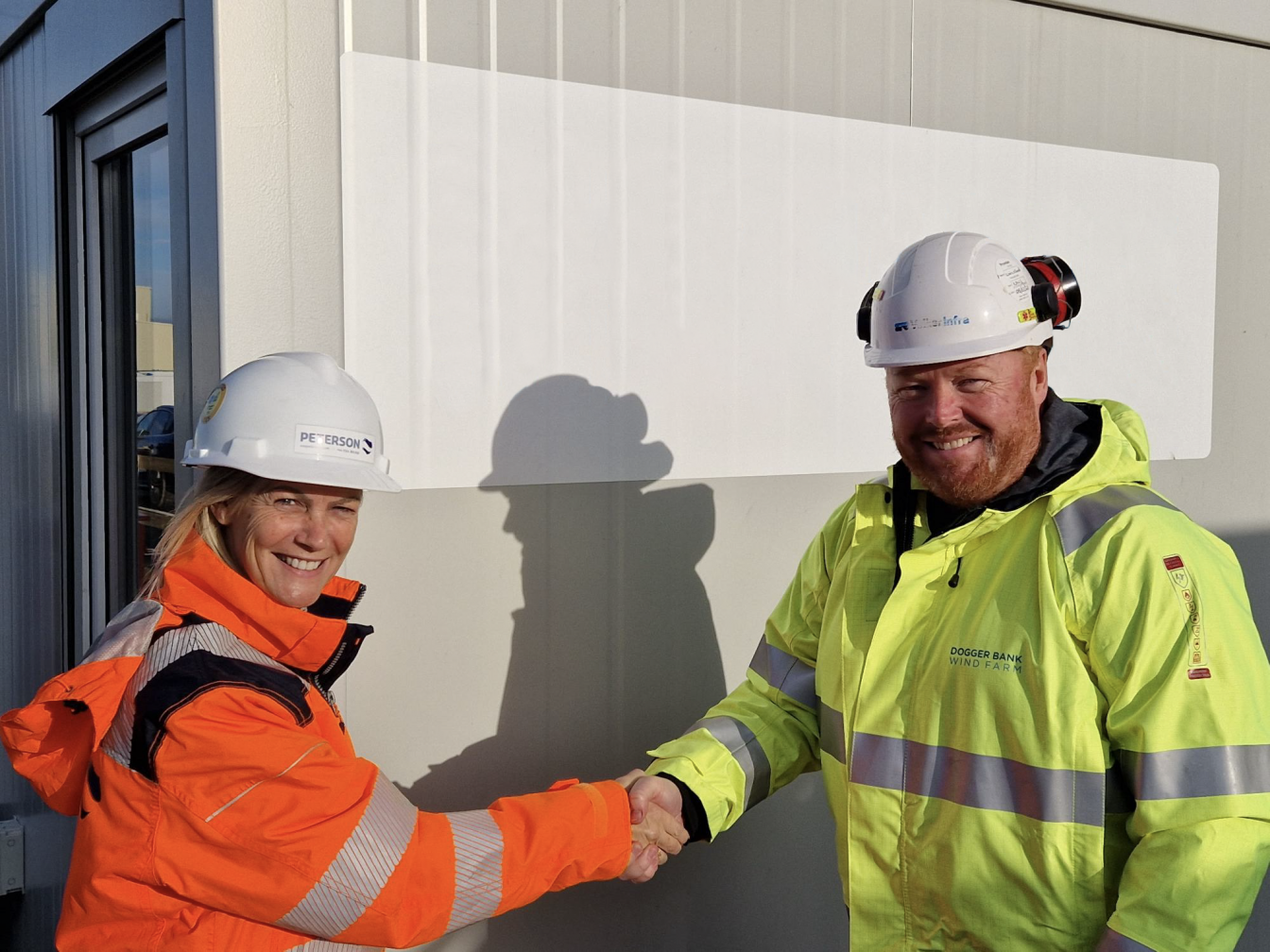
International energy logistics provider Peterson has been awarded a contract to provide facilities management for shared access to the onshore converter stations for two major offshore wind farms, with the creation of 20 local jobs.
The three-year contract will see Peterson support with the grounds (summer and winter) maintenance, drainage and site security for the shared access areas of a 20-acre converter station construction site adjacent to Wilton International in Teesside on behalf of Dogger Bank C and Sofia offshore wind projects.
Sofia Offshore Wind Farm is 100% owned by RWE and Dogger Bank C, the third phase in the wider Dogger Bank Wind Farm, is owned by SSE Renewables (40%), Equinor (40%) and Vårgrønn (20%). The projects are cooperating closely due to their proximity, including joint contracts for civil engineering and facilities management.
Sandra Hawkins, General Manager for England at Peterson, said:
“We are delighted to have the opportunity to apply our expertise as part of the development of these world-leading wind farms which will deliver significant, long-term benefit to the local area in the years ahead.”
Jason Hendry, Managing Director for England and Renewables Strategy at Peterson, said:
“This contract builds on our existing service offering to the offshore wind sector and aligns with our wider strategy to provide integrated solutions to our customers.
“We look forward to working with all involved to deliver more sustainable energy solutions to households in the UK.”
The contract marks an exciting time for Peterson who are on track to reach carbon neutral status across their global operations by the end of this year.
Supply Chain Manager for Dogger Bank Wind Farm, Robin Banning, said:
“On behalf of Dogger Bank C and Sofia we welcome Peterson’s expertise to our team, bringing local knowledge and capability to the shared site of both project’s converter stations as they continue to take shape.
“This contract will provide around 20 new UK jobs in our supply chain, and will present new opportunities for employment in the north-east of England where a number of our onshore assets will be located, along with our offshore construction hub at Able Seaton .”
29th September 2022 in Construction, Project news, Supply Chain

Hughes Subsea Services Ltd has signed a contract with Dogger Bank Wind farm to provide vessel, crew and equipment to complete the 2023 internal anode installation campaign across the first phase of the wind farm.
The contract will support up to 60 jobs in the UK supply chain.
Hughes will install the internal cathodic protection systems across the complete 95 wind turbines being installed at Dogger Bank A, using a walk-to-work offshore support vessel.
The system is designed to protect the turbines from corrosion during the wind farm’s 35-year operational lifetime and is being manufactured by South Tyneside specialist, Metec UK.
The work scope is scheduled to commence in Q2 of 2023 and has an expected duration of 2 months.
Ian Hughes, Managing Director at Hughes, said:
“We’re delighted to have been chosen by Dogger Bank Wind Farm for the Anode Installation contract award, we look forward to working with the developers on delivering and building on a successful project.”
Dogger Bank Wind Farm Senior Project Manager, Alan Borland, said:
“Hughes will play an important role in protecting our assets from seawater corrosion during the operational lifetime of the world’s largest offshore wind farm by installing our internal foundation anodes”
“The contract will also support an additional 60 roles in the UK supply chain when this work is underway from Spring 2023.”
Picture caption: Hughes Subsea Services Ltd has signed a contract with Dogger Bank Wind farm to provide vessel, crew and equipment to complete the 2023 internal anode installation campaign across the first phase of the wind farm.
Ends
26th September 2022 in Press releases, Project news, Supply Chain
- Convertor station works begin for third phase of world’s largest offshore wind farm
- Work carried out by Hitachi Energy and supported by sub-contractor Keltbray
- Keltbray awarded civil engineering contracts for all 3 phases of Dogger Bank Wind Farm
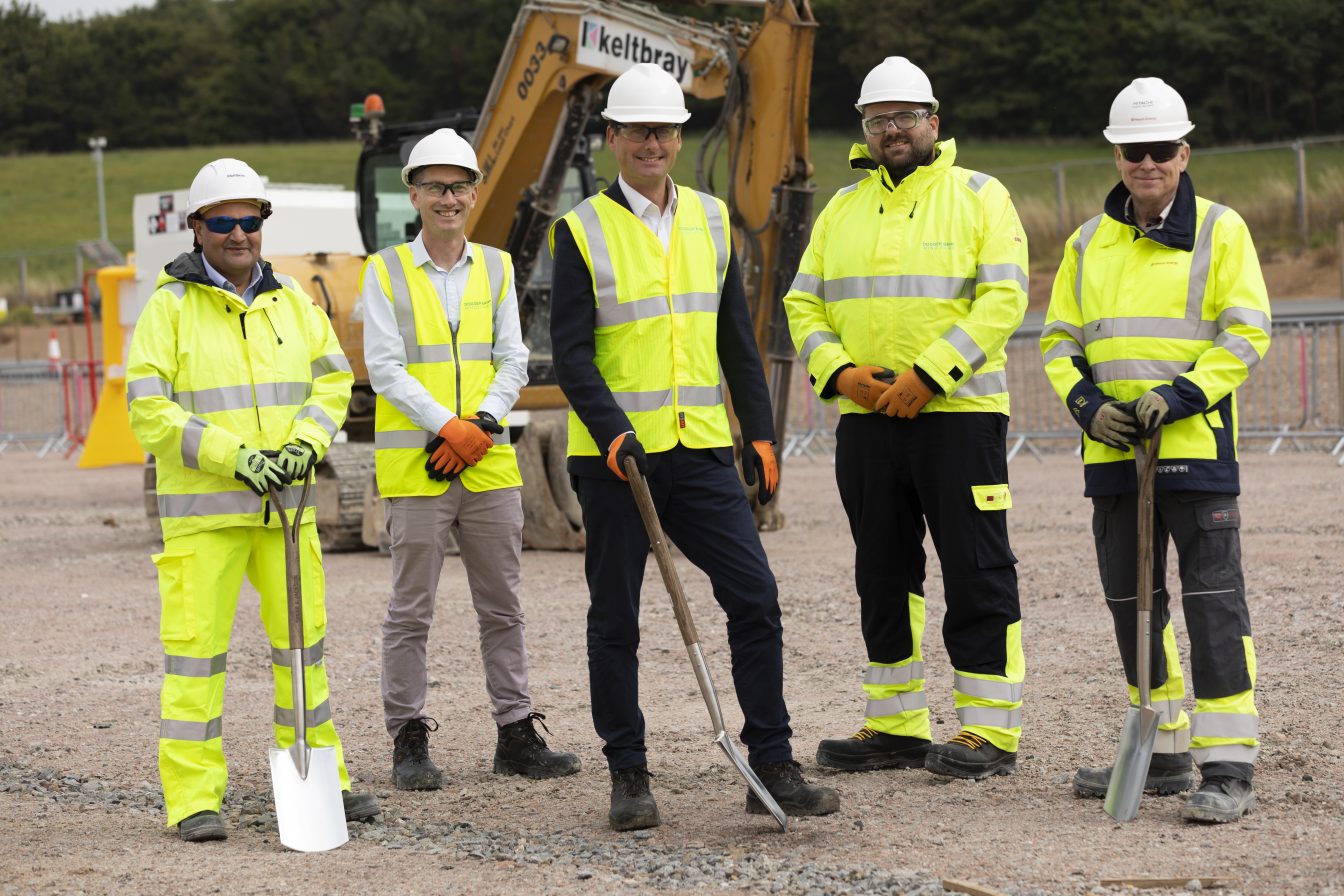
- Official ground-breaking event held at Hitachi site in Redcar
- Up to 170 UK-based roles supporting construction of the wind farm’s three convertor stations at peak of work
Work has started on the convertor station for the third phase of the world’s largest offshore wind farm
Tier one contractor Hitachi Energy and civil engineering sub-contractor Keltbray will construct the convertor station on the Sembcorp complex near Lazenby in Teesside.
Dogger Bank Wind Farm Senior Project Manager Alan Borland, said:
“Starting work on the third convertor station for the world’s largest offshore wind farm is another exciting milestone for the whole team.
“It’s great to see our tier one supplier awarding another civil contract to Keltbray, a company which has played a key role in the development of the first two phases of the project.
“Dogger Bank Wind Farm will provide an affordable and secure source of renewable energy for 6 million UK homes from 2026.
Dogger Bank Wind Farm is being built in the North Sea more than 130km from the Yorkshire coast in three phases known as Dogger Bank A, B and C. Dogger Bank A and B phases will connect to the national grid near Beverley in East Riding of Yorkshire, while Dogger Bank C will connect to the grid near Redcar, in Teesside.
The world-class renewable energy project, which will be capable of powering 6 million UK homes annually on completion, is a joint venture between SSE Renewables (40%), Equinor (40%) and Eni Plenitude (20%).
It will be the first HVDC connected wind farm in the UK, paving the way for other UK wind farms and suppliers to build on our experience transmitting renewable energy safely and efficiently across long distances while minimising potential losses.
Hitachi Energy is supplying the HVDC systems to connect the wind farm to the national grid at Creyke Beck in East Riding and Lackenby near Redcar. Each phase of the project will have both an offshore and onshore convertor station to facilitate efficient transmission of renewable energy via HVDC subsea and onshore underground HVDC and HVAC cables. The two convertor stations in East Riding of Yorkshire are currently under construction at the A1079 site between Beverley and Cottingham.
In Summer 2021 Tees Valley Mayor Ben Houchen and Redcar MP Jacob Young signalled the start of site preparation work for the Dogger Bank C convertor station by specialists Jones Bros Civil –Engineering UK. Last week representatives from Dogger Bank, Hitachi Energy and Keltbray Group gathered to mark the start of work on the third onshore convertor station on the pre-prepared site, which is due to be completed by Q1 2025.
Keltbray is one of several UK-based firms to secure contracts on the world’s largest offshore wind farm, with more than 1,500 UK roles already created or supported in relation to the construction and operation of Dogger Bank Wind Farm. Durham-based and family-owned steel construction firm Finleys is one of the businesses that has helped with the construction of the first two convertor stations near Beverley in East Riding of Yorkshire. Up to 170 UK based roles will be supported on the two convertor station construction sites during peak times for the project.
Goran Isacsson, Project Director for Hitachi Energy, said:
“The start of construction work at the Dogger Bank C converter station here in Redcar is a great moment for the Hitachi Energy team. We are proud to be delivering three HVDC® Light converter stations for the world’s largest offshore wind farm, Dogger Banker Wind Farm. HVDC technology significantly contributes towards a carbon-neutral energy future by enabling the integration of large-scale and remote renewable energy generation.”
Keltbray Highways Managing Director, Vip Gandhi said:
“The ground-breaking ceremony marks an exciting milestone in continuing our involvement with the prestigious Dogger Bank Wind Farm. Phase C gives us the opportunity to continue providing opportunities to local people and supply chain, collectively working towards a renewable future.”
ENDS
Picture caption: Keltbray Highways Managing Director – Vip Gandhi, Dogger Bank C Project Manager – James O’Hara, Dogger Bank Wind Farm Commercial Director – Simon Bailey, Dogger Bank Wind Farm Senior Project Manager – Alan Borland and Hitachi Project Director – Goran Isacsson.
22nd September 2022 in Press releases, Project news, Supply Chain

NKT is set to produce low-carbon copper cables for the third phase of the world’s largest offshore wind farm, significantly reducing the project’s carbon footprint during construction.
NKT, its supplier and customers have entered into an agreement to use low-carbon copper for the 320 kV HVDC cables the company is delivering to the third phase of the wind farm, known as Dogger Bank C.
The use of low-carbon copper will reduce the carbon footprint of the HV cable systems by more than 23 000 metric tons of CO2 (1), which is equivalent to 7,700 average family cars driven for one year (2).
Following a preferred supplier agreement announced in 2020, Dogger Bank Wind confirmed NKT as the main contractor for delivery and installation of high-voltage DC (HVDC) onshore and offshore export cable systems for Dogger Bank C in June 2021.
Simon Bailey, Commercial Director for Dogger Bank Wind Farm at SSE Renewables said:
“Along with our partners Equinor and Eni Plenitude, we are constantly looking at ways to reduce carbon emissions as much as possible throughout the construction process. It is fantastic that our HVDC export cable supplier, NKT, will use a low-carbon copper, which will significantly reduce the carbon footprint of the construction works on Dogger Bank. The HVDC cable is a crucial component, as it will connect power generated from the windfarm to the national grid.”
Alexander Kara, President & CEO of NKT said:
“This pioneering cooperation with our customers and suppliers enables us to produce even more sustainable cables using low-carbon copper. I am pleased that we have set up this game changing collaboration, so we can continue contributing to connecting a greener world. This will ultimately help us meet our sustainability commitments, including becoming a net-zero emission company.”
The low-carbon copper cathodes come from the Boliden Aitik mine in Northern Sweden. Vehicles in the mine and the smelters are powered by fossil free electricity and the delivery of copper cathodes is done domestically by electric train from the mine to Elcowire in Helsingborg that in efficient processes then produces the low-carbon copper wires.
The use of low-carbon copper will significantly reduce the carbon footprint of NKT’s cables as it comes with less than half the carbon footprint of standard copper, which has been third-party validated The manufacturing of the high voltage cables takes place in NKTs factory in Karlskrona in Sweden, which is running on 100 % renewable electricity.
Installation of the cable system at Dogger Bank C in the North Sea will be done by NKT Victoria, one of the world’s most advanced and fuel-efficient cable laying vessels.
(1) Low-carbon copper from Boliden has a carbon footprint of less than 1,5 kg CO2eq/kg of copper, which is significantly lower than the European average of 4,1 kg CO2eq/kg of copper.
(2) Gasoline-powered family cars. Source: EPA-United States Environmental Protection Agency.