31st August 2021 in Community News, Press releases, Project news
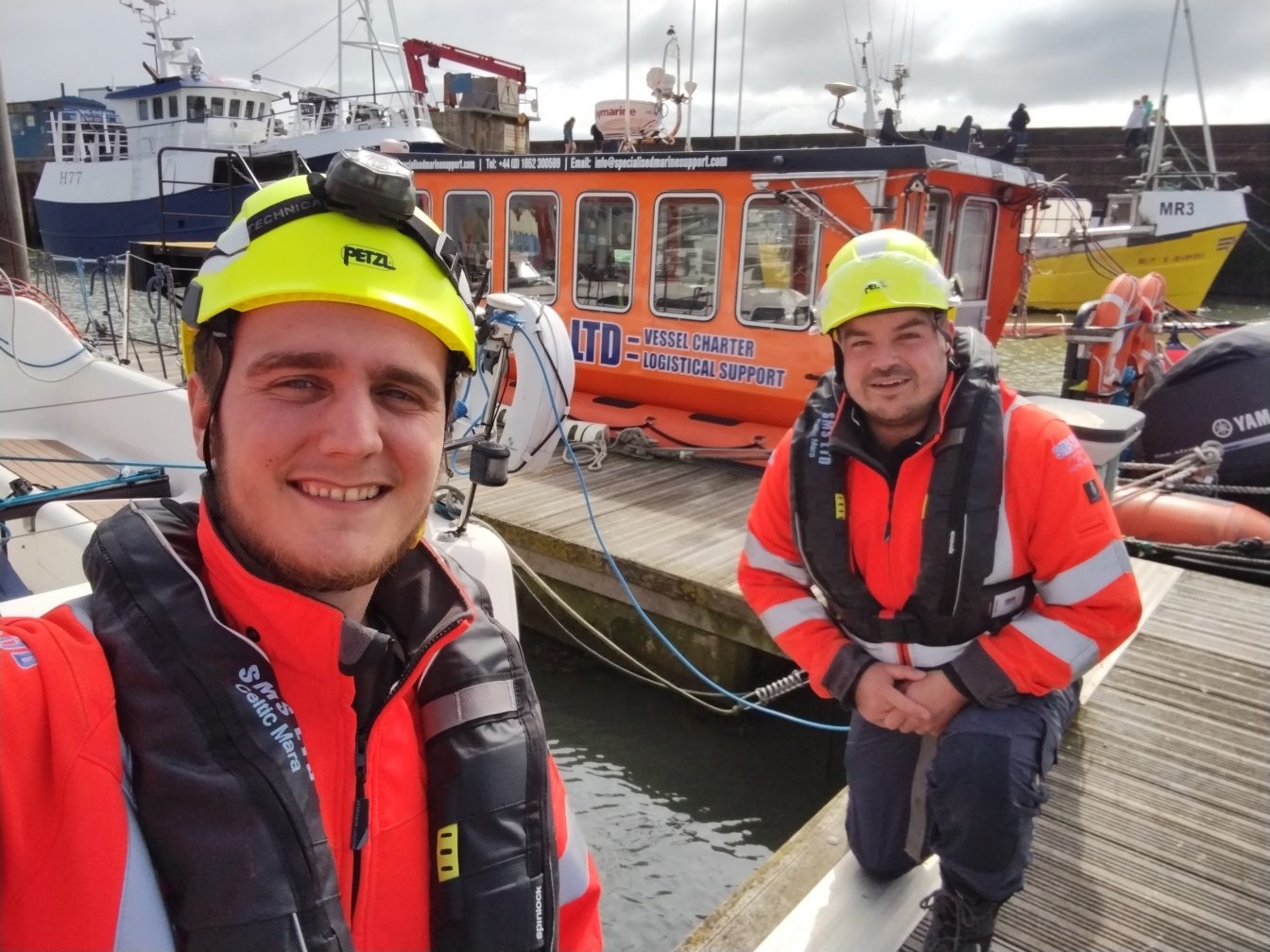
A marine support crew working on Dogger Bank Wind Farm rescued a young boy at the weekend, when he got into difficulty in water at Bridlington Harbour.
The two-man crew from Scotland-based SMS was returning to the harbour on Sunday, when they heard a splash on the opposite side of the pontoon.
Celtic Mara Skipper Chris Warren and Deck Hand Neil MacInnes, spotted a young boy clinging to side of the pontoon in a state of panic. Neil pulled the boy to safety while Chris prevented a ladder from a nearby yacht falling onto the boy’s head.
The team offered the little boy, aged approximately 7 or 8, thermal protection and reassurance before leaving him in the care of his family.
“We were happy to have been in the right place at the right time to reach out and help this little boy. When we got to him he was shocked, cold and shivery, but thankfully didn’t appear to have swallowed any water,” explained Chris.
“We didn’t see how he got into difficulty and while the water there isn’t that deep, the ground is thick with mud and the temperature of the water is enough to send you into a panic.
“As we’re all trained in health and safety, first-aid and marine rescue, having commercial boats in a harbour to support a wind farm development can offer an extra degree of resilience, in addition to the critical work already carried out by the local RNLI and independent lifeboat crews.
“In our work we come across quite a lot of people near water who aren’t wearing lifejackets, and perhaps don’t fully appreciate the hidden dangers of falling into cold water.
“ As experienced mariners we would advise anyone who is spending time near water to follow the advice given by the RNLI at www.rnli.org”
Dogger Bank Wind Farm, which is to be built more than 130km off the Yorkshire coast in the North Sea, is currently being developed in three 1.2GW phases: Dogger Bank A, B and C.
Dogger Bank A and B is a joint venture between SSE Renewables (40 per cent), Equinor (40 per cent) and Eni (20 per cent), and will connect the National Grid between Beverley and Cottingham. Dogger Bank C is a 50:50 joint venture between SSE Renewables and Equinor and will connect the National Grid on Teesside.
Chris and Neil are currently supporting Dogger Bank’s export cable provider, NKT and its sub-contractor ABCO, with crew transfers as they carry out inspection work on the nearshore cable route for A and B, adjacent to the landfall point at Ulrome.
Community Engagement Manager for Dogger Bank Wind Farm, Rachel Lawrence, said:
“The crew’s quick actions undoubtedly prevented what could have turned out to be a very different day for the little boy.
“The safety of people working on our development and the surrounding communities is paramount on Dogger Bank Wind Farm. The Celtic Mara team perfectly embody that safety culture, and deserve to be recognised for demonstrating how to work swiftly, calmly and efficiently in a crisis.
“We hope the little boy involved is feeling much better. ”
23rd August 2021 in Blogs, Community News, Project news
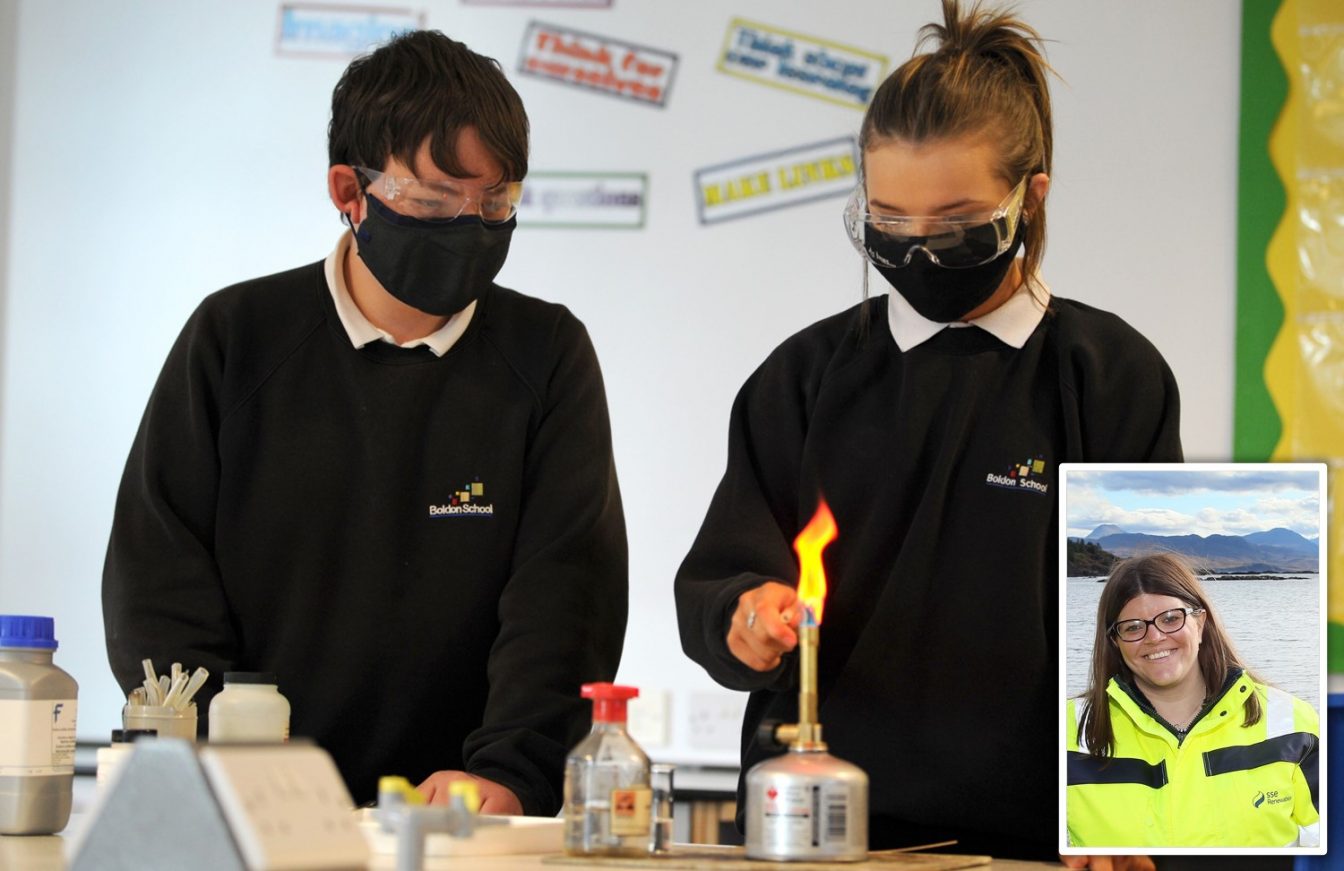
“With the risk of employment uncertainty in the post-pandemic world, and with many of our young people impacted by education and social challenges, we have an opportunity to use our net zero future as a springboard to turn this tide,” explains Lindsay Dougan, Community Investment Manager on Dogger Bank Wind Farm.
“Dogger Bank Wind Farm is a key asset for the north and north-east of England. It will create and support thousands of jobs, as well as ensuring clean energy for future generations with the capacity to power 6 million UK homes. We take seriously our responsibility to develop the wind farm sustainably and part of this is our social commitment to share the benefit with coastal communities. We will invest £1 million during the construction of the wind farm and have committed to focusing on enhancing STEM (science, technology, engineering and maths) attainment to ensure young people are prepared for the jobs of the future.
“We made a commitment when we were developing the wind farm that we would invest in STEM as we have a responsibility to make sure young people are ready for the job opportunities on their doorstep. What we didn’t foresee was that we would be delivering this commitment during a pandemic!
“Young people have had to experience social isolation and virtual learning in the last 18 months and we have an opportunity to use our net zero future to help them thrive during the pandemic recovery and beyond.
“We have taken our commitment to local areas seriously – we have listened to education and skills partners and it is their expertise and local priorities which has determined what the STEM funding focuses on from early years in East Riding of Yorkshire to school transition in South Tyneside. This approach ensures it maximises its impact for the 25,000 young people in these local areas.
“Our net zero future promises roles that will be challenging and rewarding in equal measure. From the turbine technicians who ensure the wind farms achieve optimum performance to the planning experts who will bring us even larger and more innovative wind farms in the future. The energy transition is one of society’s most pressing priorities and we have a responsibility to inspire and support the experts who will be the key to its success.
“We know from our experience engaging with local schools how keen young people are to challenge themselves to live sustainable lives. In a recent visit to Skipsea Primary School in East Riding a colleague was asked by an 8-year-old boy whether she bought her electricity from renewable energy sources. The smart boy cleverly pointed out the electric vehicle she arrived in would only help the planet if she was buying her fuel from sustainable providers. We may be the trailblazers of offshore wind but it’s the eight-year-olds of today who will shape our tomorrow.
“As we continue to build the world’s largest offshore wind farm at Dogger Bank, we have a one-in-a-lifetime opportunity to improve the lives of people living in the coastal communities where we’re installing our infrastructure. And there’s never been a more important time to get this right.”
23rd August 2021 in Community News, Press releases, Project news

Beeford Bowling Club has become the first community group to receive a financial award from Dogger Bank Wind Farm’s new operators fund.
The £500 award will enable the group to lay a concrete base for its new equipment storage shed, as it supports members of the community to become more active following months in lockdown.
Dogger Bank Wind Farm launched its £1 million construction fund in June. The programme will enable all 124 primary schools in East Riding of Yorkshire and all 18 secondary schools in South Tyneside to increase and expand their science, technology, engineering and maths provision. Meanwhile, local community groups can apply for grants up to £500 to at https://doggerbank.com/about/community/
Work started on the onshore infrastructure for the first two phases of Dogger Bank Wind Farm last year. These phases will meet landfall at Ulrome in East Riding of Yorkshire, and connect to the National Grid between Beverley and Cottingham. The third phase of the wind farm will meet landfall at Redcar on Teesside, connecting to the National Grid at Lackenby.
Rachel Lawrence, Community Engagement Manager for Dogger Bank Wind Farm, said:
“Social isolation and lack of physical activity have both been major issues for vulnerable groups in our communities during the lockdown period. We’re delighted our first award will support a group offering a lifeline to Beeford residents, helping them to reintegrate into their community while being physically active. Despite their best efforts, the group has struggled to raise vital funds due to COVID restrictions. We couldn’t be happier to step in and support this community that has welcomed and supported us as we build the onshore infrastructure for the first two phases of the world’s largest offshore wind farm in East Riding of Yorkshire.”
Beeford Bowling Club Chairman, Cliff Hollingsworth, said:
“The past two seasons have been hard for the club as we have not been able to have fundraising events to allow us to improve our facilities. Any grants to help us do this are more than welcome and this £500 from Dogger Bank Wind Farm has come at the right time to allow us to get the base done for our new shed which means we can now follow through with this before the winter. So many thanks again from Beeford Bowling Club.”
Dogger Bank wind farm is being built in three phases, Dogger Bank A, B and C. Dogger Bank A and B are a joint venture between SSE Renewables (40%), Equinor (40%) and Eni (20%). Dogger Bank C is a joint venture between SSE Renewables (50%) and Equinor (50%). SSE renewables is leading on the construction of the wind farm and Equinor will operate the wind farm for its lifetime of up to 35 years.
21st July 2021 in Community News, Press releases, Project news

History students from Outwood Academy Bydales in Marske-by-the Sea got a glimpse of their local area’s past when they visited an archaeological dig being carried out for two giant offshore wind energy projects.
Twenty year 8 students walked only 200 metres from their school to see the World War I practice trenches uncovered by Durham University’s Archaeological Services (DUAS) as part of the pre-construction survey being carried out for Dogger Bank C and Sofia Offshore Wind Farm.
The separate wind farm projects are sited on Dogger Bank in the middle of the North Sea, more than 190 kilometres from the north-east coast of England. The power they produce will be transmitted by export cables that arrive on shore between Redcar and Marske-by-the-Sea, on Teesside.
Despite different ownership – Sofia is owned by RWE Renewables while Dogger Bank C is the third phase in the wider Dogger Bank Wind Farm project and is owned 50/50 by SSE Renewables and Equinor – the projects are cooperating closely due to their proximity and to reduce impacts on local stakeholders.
Archaeologists from Durham University talked to students about the archaeological works on the site, why they are necessary for an offshore wind farm and how the information is recorded and analysed.
History teacher Gemma Green was able to give them details about why the more than 100-year-old trenches were there and the wider historical context. During WWI, the area was an airfield, set up as a ‘finishing school’ for pilots to learn combat flying.
“What an opportunity to witness WW1 history on our doorstep” said Gemma.
“We usually associate trenches with Northern France and Belgium but this gave our students and staff the chance to uncover that soldiers practiced digging trenches here in Marske before heading to the Western Front. This really brought history to life.”
The site near the landfall is now a modern housing estate known as The Landings, with streets named after people and aircraft connected with World War II, despite the airfield not being used during that conflict.
Archaeologist Peter Carne, said:
“It is great these offshore wind projects provided the opportunity to uncover the remains of WWI in the area, and we are really pleased that local children have been able to visit and see for themselves.”
Dogger Bank Wind Farm Community Engagement Manager, Rachel Lawrence, said:
“It’s exciting to be able to unearth fragments of history as we build the future energy infrastructure for UK homes and businesses. We were delighted to be able to share this experience with pupils from Outwood Academy Bydales and bring their history textbooks to life right on their doorstep.”
1st July 2021 in Community News, Press releases, Project news
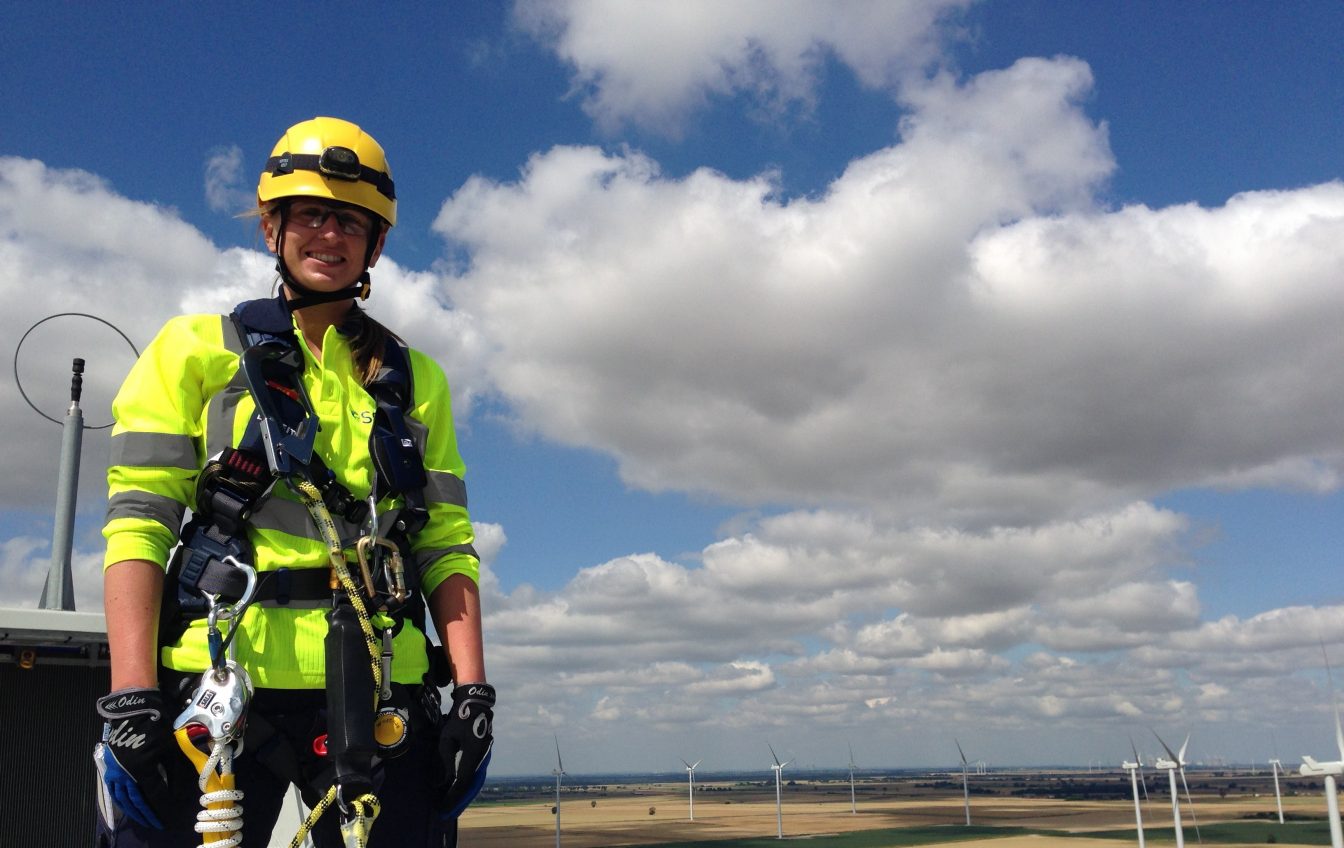
- The scholarship fund will support students undertaking courses focussed on science, technology, engineering and maths (STEM), to help young people prepare for working life in a net zero world.
- The programme will be open to students in South Tyneside, Redcar and Cleveland and East Riding of Yorkshire.
- 50 scholarships will be available during the construction of the wind farm, for students in these communities studying science, technology, engineering and maths subjects to support the cost of further education.
Students from coastal communities in the north and north-east of England can apply for a new scholarship fund to prepare them for working life in a net zero world.
Dogger Bank Wind Farm recognises the education of young people has been impacted by the pandemic and is committed to supporting the green recovery by helping the next generation to gain the jobs of the future.
The scholarship fund will focus on the areas of East Riding of Yorkshire, and Redcar and Cleveland, where the windfarm connects to the National Grid, as well as South Tyneside, where the Operation and Maintenance Base will be located.
The scholarship fund will provide grants of £5,000 to 50 local students undertaking science, technology, engineering and maths (STEM) courses in further education. The scholarship is to be used towards tuition fees.
The first round of the scholarship fund is open for applications until 30 September 2021 and further details can be found at www.doggerbank.com.
Steve Wilson, Project Director from Dogger Bank Wind Farm said
“We recognise the difficulties young people have had during the pandemic and we want to help the recovery. Our scholarship fund will help local students to prepare for the highly-skilled jobs that will be available in a net zero world. We look forward to supporting and inspiring the workforce of the future as we continue our work to build the world’s largest offshore wind farm.”
Dogger Bank Wind Farm will be located more than 130 km off the Yorkshire coast and will generate enough renewable energy to power six million UK homes. A joint venture between SSE Renewables, Equinor and Eni, SSE Renewables is leading on Dogger Bank construction and delivery while Equinor will operate the wind farm on completion.
In June Dogger Bank Wind Farm unveiled plans for a £1 million construction fund to support the coastal communities where its onshore infrastructure is being developed. The programme includes a significant investment in science, technology, engineering and maths, as well as an operators fund to support local causes. Further information is available here.